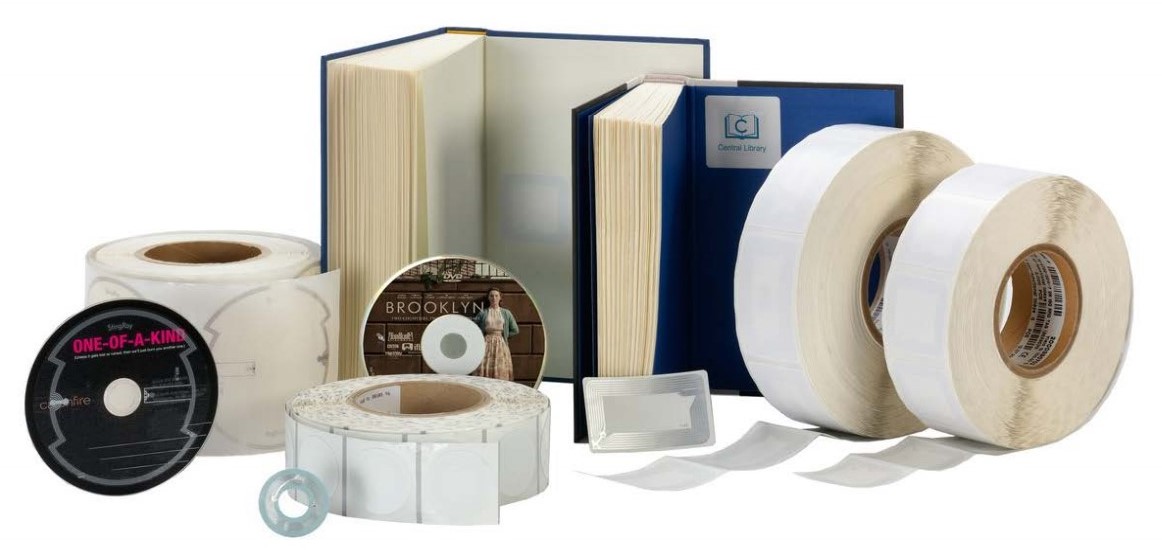
The RFID tag is the hub of the RFID system. The quality of this tag shall directly impact the success of your automation project. Here is the elaborated Technical Specification Checklist for Library RFID tags, designed for the current industry standards.
-
Frequency:
Global standard for library item-level tagging is 13.56 MHz (HF). Do Ensure it is passive (no battery involved).
-
Standard:
In order to ensures interoperability between different reader brands use ISO 15693 & ISO 18000-3 standards.
-
Memory Chip:
The "gold standard" NXP SLIX2 offers higher memory (2500 bits), better read range and longer data retention.
-
Data Retention:
Library books have a long shelf life; the tag must outlast the book itself. So tag life should be minimum 40-50 Years.
-
Anti-Collision:
In order to allows the self-check kiosk to read a stack of multiple books simultaneously, it is important that the tags work on Anti-Collision pricipals for High-Density Support.
-
Dimensions:
High Frequency (HF) Tags usually come in two sizes i.e square 50x50mm or rectangle 50x80mm. For better detection it is always advisable to use a tag with bigger antenna.
-
Adhesive:
Use a pH Neutral / Acid-Free adhesive to prevents chemical damage or yellowing of library book paper over decades.
-
Security Mode:
Use a combination of EAS & AFI to allows the gate to trigger an alarm only if the "security bit" hasn't been flipped for the books of your library only. Books from other libraries shall not generate an alarm.
-
Finish:
Use PET with Paper Overlay in order protects the internal copper antenna from moisture and physical wear. You may also use a logo printed sticker on top of this tag to personalize this tag for your library.
Our Library Tags are Guaranteed for Life.
This checklist shall help in deciding which type of tag to use for the library automation project. Here are a few advanced considerations for the technology selection of the library automation system.
-
RFID vs. Tattle Tape; Choose Your Strategy:
Tattle Tape has been the "Gold Standard" for best and covert security for close to half a century, but it lacks the inventory & circulation features. RFID tags have the inventory control with circulation management but lack covert security.
CELECT's Advice: You can consider using a "Hybrid" system in which both Tattle Tape and RFID Tags are used for the best of security and automation.
-
HF vs. UHF; Choose Your Technology:
While HF (High Frequency) is the standard for book stacks and self-checkout, some modern libraries are testing UHF (Ultra-High Frequency) for wide-aisle security gates (up to 3 meters wide) and better inventory management.
CELECT's Advice: Stick to HF for standard, but consider UHF tags if you have problems in usual stock taking and your library has very wide exit points.
-
Privacy & Data Masking:
In 2026, data privacy is a top concern for patrons.
Ensure your tags support Object Identifiers (OID) as per ISO 28560. This means only the "Accession Number" is stored on the tag, never the book title or patron name, thus ensuring absolute privacy if a tag is scanned outside the library.
